

“Will this stop my hair falling out?” Responsible product claims in the salon
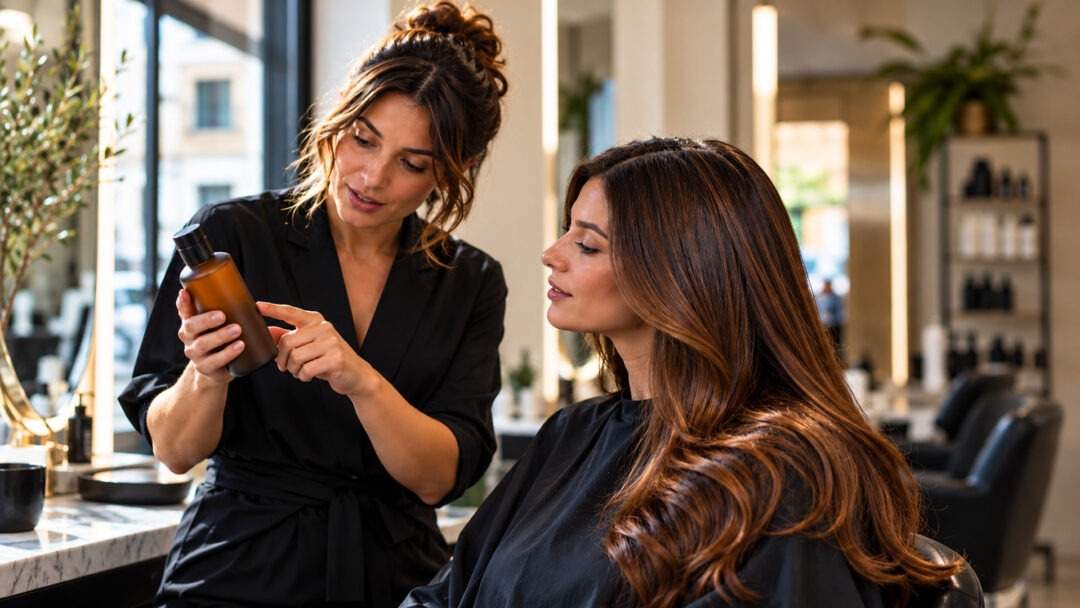
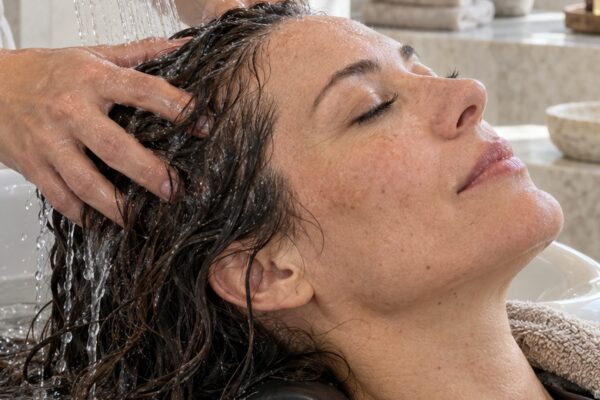
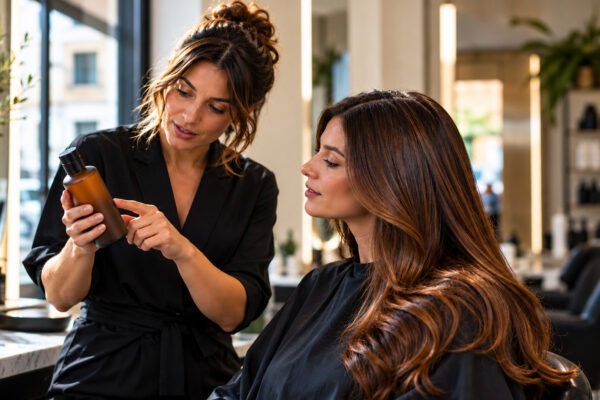
Saturday morning in an Italian salon, every chair taken, and a client at the backwash holds up a bottle of serum and asks: “Will this stop my hair falling out?” The stylist has a few seconds to answer. Last month a colleague at the next station told the same client something different about the same bottle. That small moment, repeated every day in salons, is where responsible hair product claims are won or lost, and where a brand’s reputation is decided far from its marketing office.
For anyone selling professional hair care into salons, whether a brand, a distributor or an importer weighing a new line, this is worth understanding. The client in the chair does not read the technical sheet. She hears what the stylist says. If that sentence overpromises, the disappointment lands on the salon first and on the product right after.
Where responsible hair product claims start: the backwash, not the brochure
A client asking whether a shampoo can repair damaged hair, or whether a serum will stop hair loss, deserves more than a confident sales line. She needs a useful explanation of what the product is for and where its limits are. Overstated claims create unrealistic expectations, complaints and advice that changes from one stylist to the next.
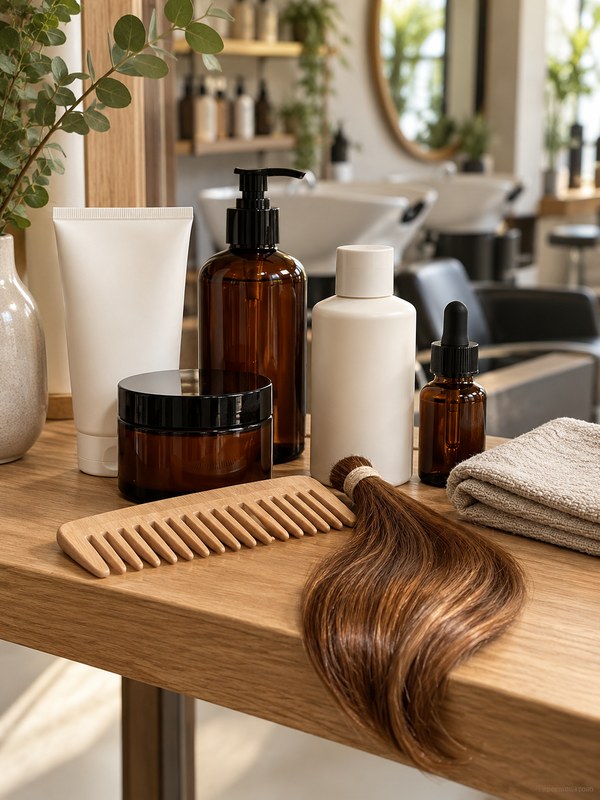
This is an operating issue as much as a communication one. Reception, colourists and stylists should not give three different answers about the same bottle on the shelf. When the team agrees on how a product is described, consultations become consistent and each professional still keeps room for their own judgement on the head in front of them.
Three kinds of sentence that sound alike
Listen to a salon talking about products for an afternoon and you will hear three different things mixed together. There are product facts: ingredients, instructions for use, characteristics confirmed on the packaging or in the brand’s official documentation. There are performance claims, which promise a result such as less breakage or more shine and should be backed by suitable evidence. And there are personal observations, a stylist describing what she saw on one client, which is an individual experience and not a result everyone should expect.
The words carry weight. “Helps hair feel smoother” is not the same sentence as “permanently repairs every damaged fibre”. Even modest-sounding claims have to match the evidence available and the use the product was designed for. Medical promises have no place in the description of an ordinary cosmetic product.
The MDP Method: check, translate, align
The MDP Method for product communication fits into a staff meeting before opening. It starts with the source. For every key claim, the team looks at the product label and the brand’s current technical documentation, and when the evidence is unclear, someone calls the supplier and asks. This is where a distributor who answers quickly and with documents earns a salon’s loyalty.
Then comes translation. The claim has to reach the client in plain words: the cosmetic benefit she can expect, who is likely to benefit, how to use the product at home and what may vary from person to person. Technical jargon repeated without explanation helps nobody at the backwash.

Finally, the team aligns. A short shared reference sheet does the job: the product, the approved claim, where the evidence comes from, the instructions, the limits and a review date. It gets revisited whenever a formula or the brand’s guidance changes. A brand that hands salons this kind of sheet ready-made, instead of a slogan, makes the whole exercise easier.
Talking about results without overselling
Back to the client with the serum. Instead of “this treatment fixes your hair”, the stylist can say: “this treatment is designed to improve softness and manageability, and the result depends on where your hair starts and on your routine at home.” Instead of “this serum stops shedding”, she explains what the manufacturer actually substantiates. And if the client describes unusual hair loss, the right answer is a referral to an appropriate healthcare professional, never a diagnosis from the chair.
Before-and-after photographs can help show a styling result or a cosmetic service, but only with honest context: comparable light and angles, the client’s permission to use the images, and no suggestion that one example guarantees the same outcome for everyone.
The same caution applies to the questions salons ask most often. Can they repeat every claim a brand makes? Not without checking that it applies to that exact product, that it is current and that it is used in the right context: a promotional slogan does not replace supporting evidence. Can a stylist say a product worked for a particular client? Yes, if it is accurate, presented as one person’s experience and shared with permission where relevant, without turning it into a promise. And when the evidence is simply missing, nobody invents it. The salon asks the supplier for documentation, narrows the wording to what can be supported, or drops the claim.

What a salon should be watching
Sales volume alone says little about whether product advice is working. More telling are the questions clients keep asking, the complaints about results that did not match expectations, product returns and what clients say about the consultation itself. Once a month, the owner can pick a few recent recommendations and ask the stylist where the claim came from and what its limits are. If the answer comes easily, the method is working.
For a brand or a distributor looking at the Italian professional market, that is the useful question to take away: when your product is on the shelf of a busy salon on a Saturday morning, what exactly will the stylist say about it, and can she back it up?
Editorial note: this is a practical communication guide, not a legal opinion. Cosmetic claims must comply with the rules applicable in the market where products are offered; in the EU, Regulation (EC) No 1223/2009 and Regulation (EU) No 655/2013 provide a relevant framework.