

Scandi bob: the clean-cut bob to watch for autumn 2026

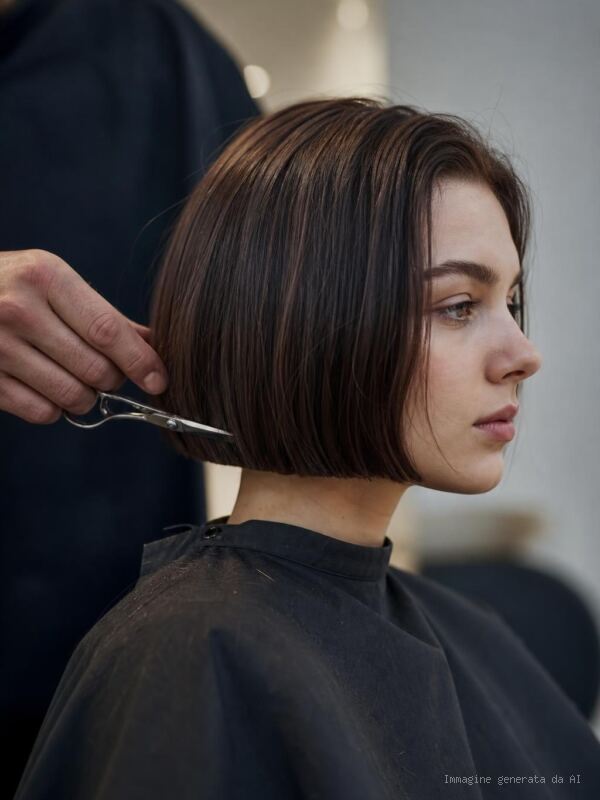
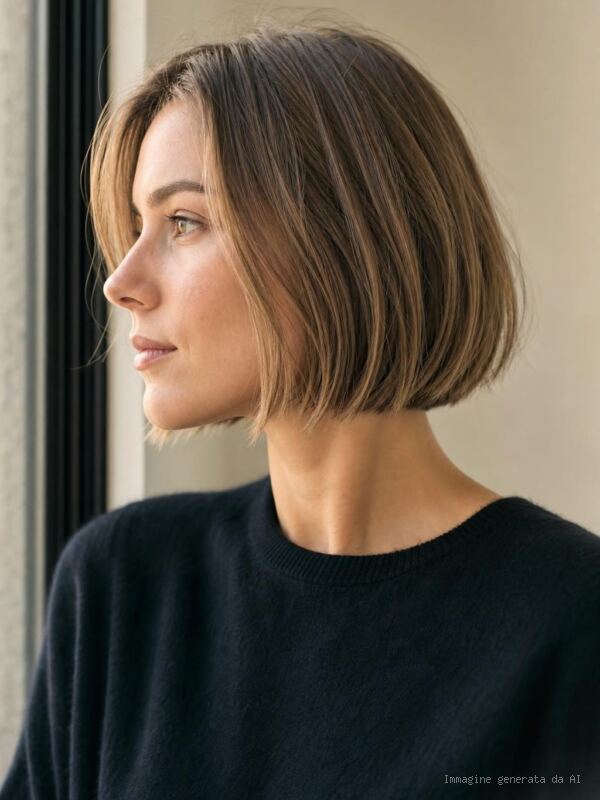
The bob is not going away. It is changing character. After seasons of highly structured shapes, visible layers and ultra-polished styling, autumn 2026 is making room for a cleaner, less “done” version: the Scandi bob.
The signal is recent. InStyle highlighted it on 30 August 2026 as one of the season’s most interesting cuts: short, essential, usually between the chin and jaw, with a fairly solid perimeter and limited layering. For salons, the useful point is not the Nordic label. It is the return of a cut that still works when the client does not spend twenty minutes styling it.
What the Scandi bob really is

The foundation is simple: a compact line, short or medium-short length, natural movement and very little constructed effect. That does not mean cutting the same square shape on every client. It works when the hairdresser removes rigidity without losing clarity.
The mood fits the wider direction of 2026. Vogue had already pointed to shinier, more intentional hair that is tidy but not stiff. The Scandi bob applies that idea to the cut: less decoration, more proportion.
The question to ask before cutting
Before saying “yes, let’s do it,” ask something more useful than “how short do you want it?”: how do you wear your hair when you do not style it?
This bob succeeds only if its shape survives real life. If the client dries quickly, often tucks the hair behind the ears, changes the parting or lets natural waves appear, the cut must be designed around those habits.
Five MDP checks before cutting
| Check | What to assess | How it changes the cut |
|---|---|---|
| Density | How much weight the perimeter creates. | High density may need internal weight removal without weakening the line. |
| Texture | Straight, wavy, curly and natural memory. | Waves may need more freedom and a few extra millimetres. |
| Hairline | Nape, temples, cowlicks and side growth. | They determine where the edge can fall without kicking out. |
| Jaw and neck | The point where the line finishes. | Two centimetres can completely change the effect on the face. |
| Routine | The client’s real styling time. | The more wash-and-go the routine, the more the structure must work alone. |
When to keep it full and when to lighten it
On fine hair, a fuller line can create presence. On very dense hair, copying the same compactness can produce a triangular shape. The answer is not automatic layering. Often it is enough to work internally, removing weight where needed while keeping the edge readable.
Why it is commercially strong
The Scandi bob is not designed to stay motionless. The side can move, the parting can remain soft and natural texture does not ruin the result. This makes it more wearable than many editorial bobs and connects with the wider return of moving hair noted by Vogue.
Four mistakes that turn it into an ordinary bob
- Using one length for every face: the trend name never replaces proportion.
- Over-thinning the ends: when the perimeter loses presence, the cut loses its identity.
- Forcing a perfect straight finish: some natural movement must remain.
- Ignoring the nape: strong growth can lift or open the line after a few days.
How to present it during consultation
Do not sell the name. Show where the line will fall, how full the edge will remain and how much home styling it will need. Compare a fuller version with a softer one, then choose according to density, texture and habits.
MDP Trend Radar
MDP classification: GROWING. The signal is fresh and it is too early to call it dominant. But it is easy to understand, adaptable to several textures and well aligned with demand for polished hair that does not look rigid.
MDP technical verdict
Approved. Not because it is revolutionary, but because it is highly sellable when personalised. It works when the edge remains clear, the weight is controlled and the cut still looks good without a perfect blow-dry.
Scandi bob FAQ
Does it always have to be straight?
No. It can work very well with natural waves when length and weight are calibrated to the texture.
Does it suit fine hair?
Yes. A fairly solid perimeter can improve the appearance of density, but excessive thinning should be avoided.
How short should it be?
There is no mandatory length. Chin-to-jaw is common, but the right point depends on the neck, hairline, face and hair behaviour.
Transparency note: article curated by Lorenzo, MDP Technical Director. The trends come from the cited editorial sources; the checks, Trend Radar and verdict are MDP editorial work supported by the MDP editorial and AI method.