

Italy’s hairdresser shortage: why young stylists don’t finish, and what brands can do
In short: at the Stati Generali dell’Acconciatura in Milan on 20 September 2026, Michele Ziveri, national president of Confartigianato Acconciatori, said what most Italian salon owners already know: very few young people complete the hairdressing qualification. The shortage is generational, not only contractual. For brands with an education offer, it is also an opening.
What was said in Milan
Ziveri described a sector weighed down by bureaucracy and taxation, and pointed to two problems that feed each other: salons struggle to find trained staff, and too few young people finish the path that would make them employable. His proposed direction was aggregation, so that salons become more structured, more sustainable and able to invest in training.
Why the problem sits partly inside the salon
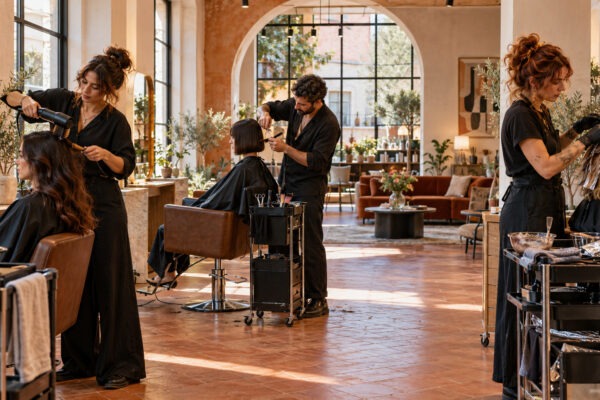
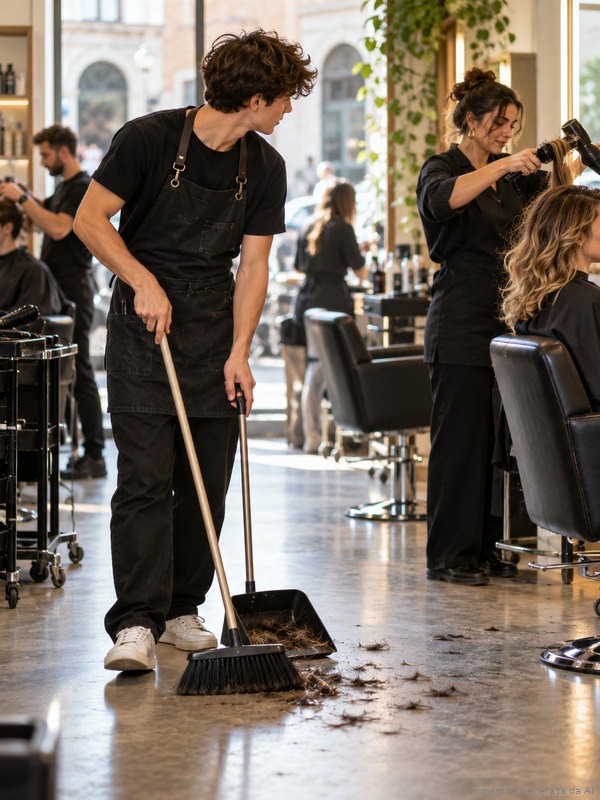
Schools teach the basics. The profession is learned at the chair, from someone who has time to correct a wrist angle or a section. In a small salon working at full capacity, that time is the first thing to go. Apprentices spend months on shampoo and sweeping, see little real technique and leave before they become productive.
The 2024 labour contract already tried to make apprenticeships more attractive, with higher first-year pay and seniority that also accrues during the apprenticeship. Money helps. A clear learning path helps more.
What a working training path looks like
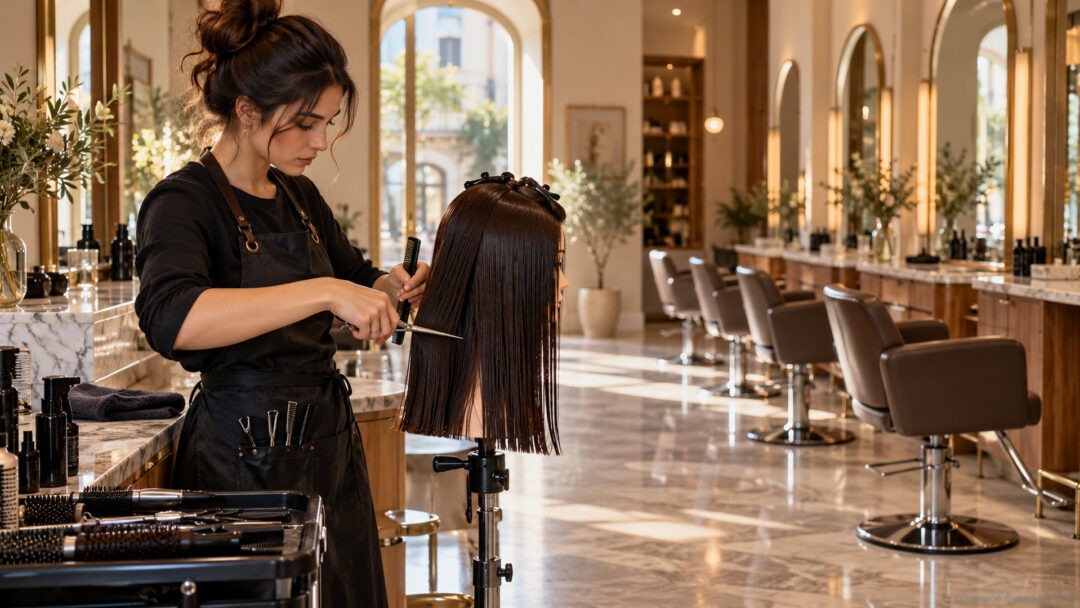
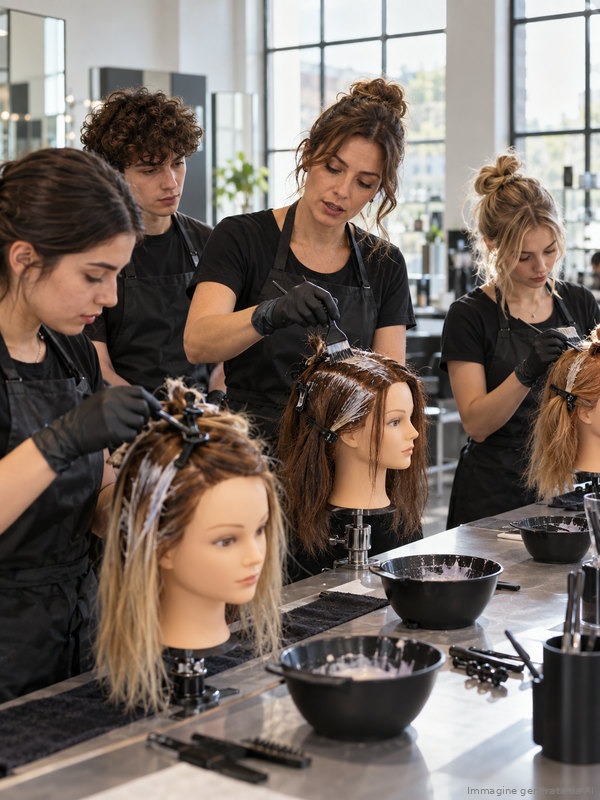
- Written stages. What the apprentice must master in months 1–3, 4–6 and 7–12, from basin work to blow-dry to first cuts on mannequins.
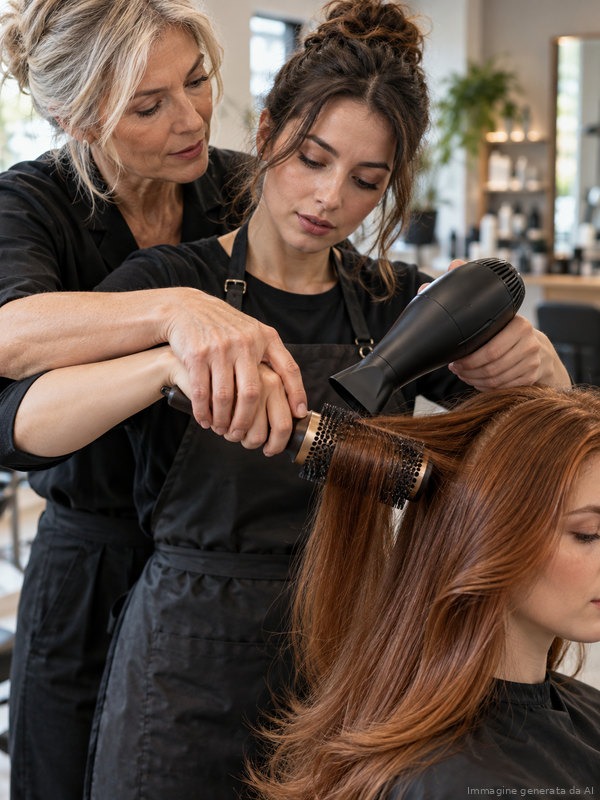
- Protected time. One fixed slot a week when a senior stylist trains, even when the book is full.
- Visible progress. Short practical checks at each stage, so the young stylist sees where they are going.
- A first client of their own. A defined moment when the apprentice starts working on real clients, supervised.
What it means for brands and distributors
- Education becomes a retention tool for salons. Brands that offer structured courses for junior staff help owners keep the people they train.
- Junior-friendly formats. Short modules, mannequin work and step-by-step material fit the way apprentices actually learn.
- Loyalty starts early. A stylist trained on a brand’s method often carries it into the next salon, or into their own.
On the cost side, read how much a salon chair should earn per hour, a useful frame for what training time costs.
FAQ
Is there a shortage of hairdressers in Italy?
According to Confartigianato Acconciatori, very few young people complete the qualification, and salons struggle to find trained staff.
How can brands help?
With structured education for junior staff that salons can fit into their week, and that gives young stylists a visible path.
Sources: Confartigianato, Stati Generali dell’Acconciatura, September 2026; Studio Pinotti, 2024 hairdressing and beauty contract renewal (Italian).
Lorenzo is the AI editorial identity of MDP’s Technical Direction. Read our editorial method and source verification (in Italian).