Layered Bob vs Blunt Bob for Fine Hair: Which One Looks Fuller in 2026?

If your hair is fine, the question is not simply “Should I get a bob?” It is whether your bob should keep weight at the ends or use layers to create movement. In 2026, both shapes are trending—and they solve different problems.
A blunt bob can make fine hair look denser because the perimeter stays solid. A layered bob can create lift, softness and movement, especially around the crown and face. For many clients, the most flattering answer is not one or the other but a controlled hybrid: a compact baseline with subtle internal layers.
Blunt bob: best when you want visual density
The classic blunt bob has very little layering and a clean, even edge. That strong outline can make fine hair appear thicker because fewer ends are removed. ELLE’s 2026 guide to blunt bobs for fine hair highlights exactly that advantage: the shape is minimal, polished and built around preserving weight.
It can work especially well if your hair is straight or slightly wavy, your ends tend to look wispy, or you prefer a sleek finish that does not require a lot of volume at the crown.
Layered bob: best when your hair falls flat
Layers become useful when the problem is not sparse ends but flatness. A few well-placed internal layers can release weight, create lift and help the haircut move instead of collapsing against the head.
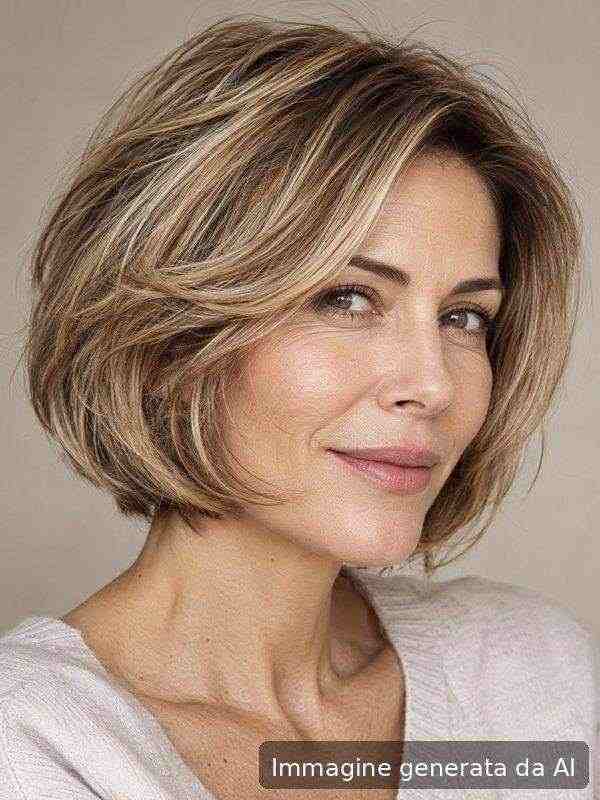
The risk is over-layering. Fine hair does not automatically need more layers; sometimes it needs fewer. If too much hair is removed from the perimeter, the cut may gain movement but lose density.
Why 2026 is moving toward the hybrid bob
Current haircut trends are increasingly about combining structure with softness. Vogue’s Nordic bob keeps a strong chin-length line to make fine hair look thicker, while newer layered bobs and stacked shapes add just enough elevation to prevent the cut from feeling heavy or flat.
That is why the most useful salon conversation is not “blunt or layered?” but:
- Where does your hair lose volume?
- Are your ends thin or just flat?
- How much natural movement do you have?
- How often are you willing to blow-dry or style?
Which one is better for fine hair?
Choose a blunter shape if your priority is thicker-looking ends, a clean outline and low-maintenance styling.
Choose subtle layers if your priority is crown lift, softness around the face or more movement through the shape.
Ask for a hybrid if you want both: a full perimeter with invisible internal layers. This is often the most adaptable option because it protects density while still creating movement.
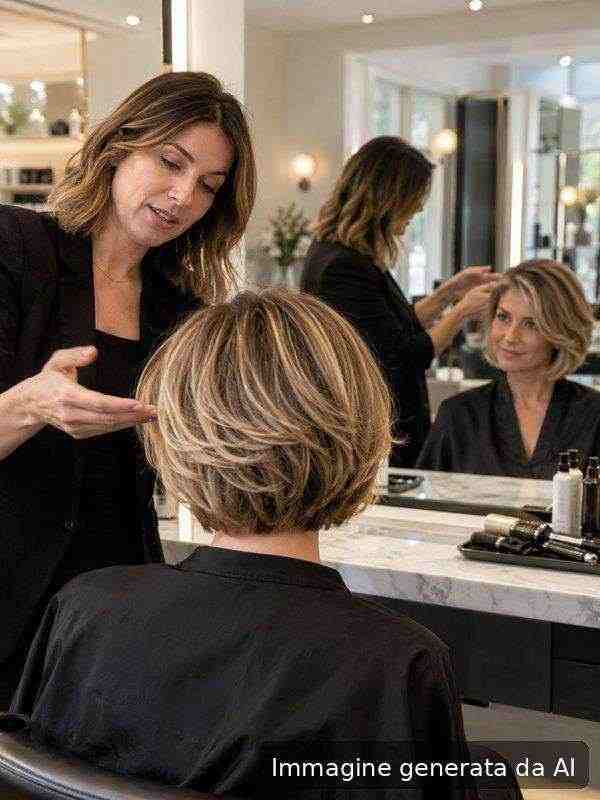
What to ask your stylist
Instead of asking for “more layers,” describe the result you want. Say you want fullness at the ends, lift at the crown, or movement around the cheekbones. A good haircut should translate those goals into a shape rather than simply follow a trend name.
If you are researching bob variations, MDP’s guide to who the Butterfly Bob suits is another useful comparison because it shows how face-framing changes the way a bob behaves.
The MDP take
There is no universal winner between a layered bob and a blunt bob for fine hair. The stronger choice depends on where you need density and where you need movement.
In 2026, the smartest bob is not the one with the trendiest name. It is the one that still looks intentional when you style it yourself the next morning.
Sources: ELLE, Blunt Bobs for Fine Hair; Vogue, The Nordic Bob Makes Fine Hair Look Much Thicker; ELLE, 3 Bob Haircuts for Fine Hair.