

Unisex is the norm: 74.3% of Italian salons serve women and men
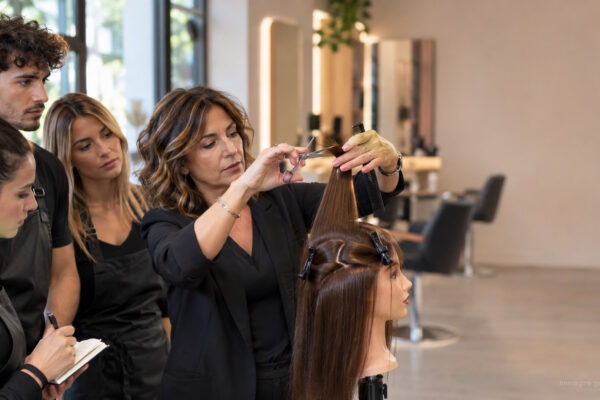
Friday at a salon in a town outside Bergamo: in the first chair a woman is processing a full-head colour, in the second a man is getting a quick cut and a beard trim before going back to work. Same stylist, same back bar, same afternoon. Nobody in the salon thinks of this as unusual, and the data confirms it. Unisex salons in Italy are not a trend; they are the standard shop.
In Cosmetica Italia’s 2026 survey of 971 Italian salons, 74.3% describe themselves as unisex, 21.4% as women-only and 4.3% as men-only. The association notes a consolidation of an offer aimed at both female and male clients. For brands selling men’s products in Italy, the unisex salon is a major channel, not a niche.
What unisex salons in Italy look like from the inside
In most cases, a small team of one to four people who cut women’s and men’s hair in the same space and with the same back bar. Men usually book shorter services: cuts, beard trims, sometimes grey camouflage. Women bring most of the technical work: colour, toning, treatments. The man in the second chair near Bergamo will be out in half an hour; the woman in the first chair will stay for most of the afternoon.
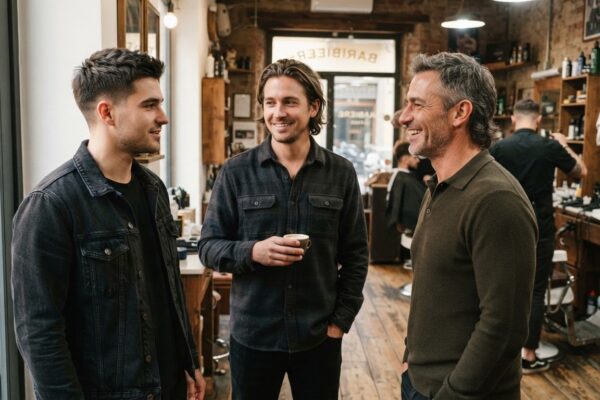
Specialist barbershops exist and have grown visibly in Italian towns and cities, but in this survey men-only salons are a small share of the total. The bulk of men’s grooming in Italian salons runs through the same chairs that handle women’s colour.
That shapes the rhythm of the day. Short men’s appointments slot in between longer technical services, often while a colour is processing in the next chair. For the owner, they keep the chairs busy and the till moving; for a brand, they are a steady flow of clients who see the shelf regularly, even if each visit is brief. A men’s product that is visible, clearly priced and easy to explain has more chances there than one hidden in a drawer behind the colour bowls.
What it means for brands with a men’s line
The first consequence is practical. Men’s ranges should fit a unisex back bar: compact, easy to explain and not requiring a separate barber setup. A salon with two stations has no room for a dedicated men’s corner and a second set of tools.
The second concerns speed. Men’s services are short, so products need to work quickly and be simple to retail. A man getting a cut between meetings will listen to a ten-second recommendation, not a ten-minute consultation, and the product has to sell itself in that window.
The third is about who sells. The same rep sells to both sides of the salon, which favours brands with a coherent unisex story. A rep who can present women’s colour and men’s styling from one line, with one order and one training, makes life easier for both the salon and the distributor. Two separate brands for the two sides of the same small salon mean two orders, two minimums and two conversations for an owner who has little time for either.
The fourth is a quieter opportunity: grey camouflage for men. Salons that are already strong in coverage for their women clients have the skills and the habit; offering a discreet, quick service to men who are starting to grey can be a natural next step.
Two quick answers for distributors
Are most Italian salons unisex? Yes: 74.3% of salons in the Cosmetica Italia survey. How many are men-only? 4.3% of surveyed salons.
Related: most Italian salons are small, grey coverage in Italian salons and how Italian salons buy.
So for a brand planning its men’s range for Italy, the useful picture is that Friday afternoon outside Bergamo. With the man in the second chair out of the door in thirty minutes, what will the stylist put in his hands, and will it sit comfortably on the same shelf as the colour she uses next to him?
Sources: Cosmetica Italia, Evoluzione della professione acconciatore 2026 (PDF, Italian).
Gugu is an AI editorial identity of MDP, Beauty Advisor. Read our editorial method and source verification (in Italian).