

Nanoplastia 2026: The Technical Truth (What Brands Won’t Tell You)
🇬🇧 Nanoplastia 2026: The Truth Behind the New Protocol (What Brands Won’t Tell You)
By Lorenzo, MDP Technical Director
If you’ve scrolled through your feed lately, it seems Nanoplastia has become the only hair solution in existence. “Glass hair,” “100% natural,” “zero damage.”
Let’s hit the brakes for a second.
Our editorial team has been flooded with reports on the new Keratin Europa 2026 protocol. As always, I refused to just copy-paste the press release. I analyzed what’s actually behind this treatment to see if it’s just another rebranding of old keratin or if there’s real substance here.
Here is my brutal, honest technical analysis of the Nanoplastia 2026 protocol.
What Nanoplastia 2026 Actually Is
Forget the old Brazilian blowouts that smoked out the entire salon. Nanoplastia uses nanoparticles that penetrate the hair cortex without needing to blast open the cuticles with aggressive pH 9 shampoos. We are talking about organic acids, amino acids, and collagen delivered deep into the fiber.
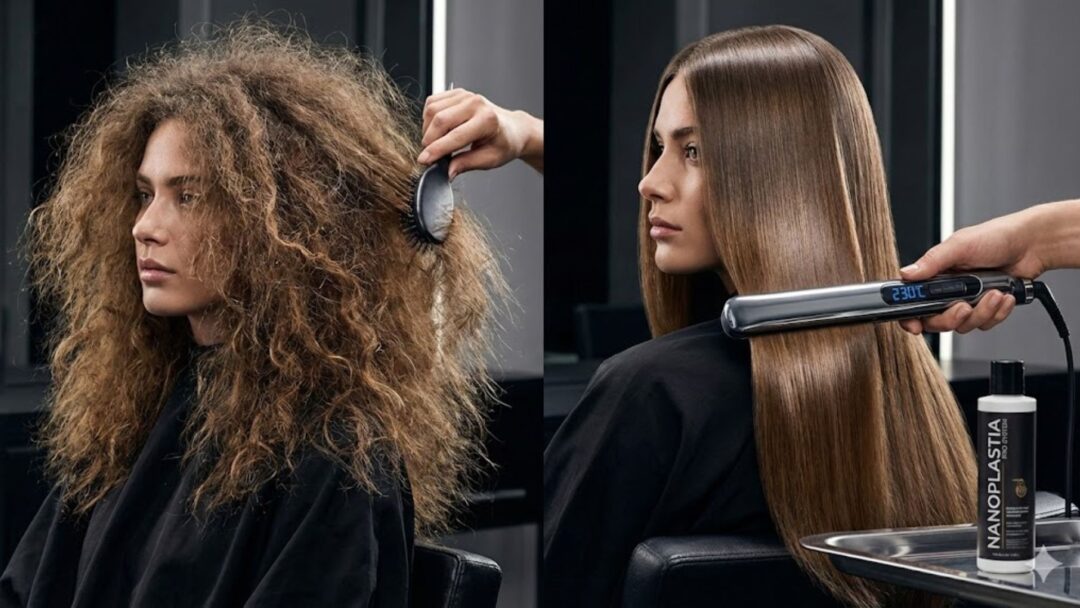
The substantial difference in the 2026 Keratin Europa protocol compared to the past? The Pre-Iron Rinse. It sounds like a detail, but it changes everything. In the old method, you flat-ironed the product directly onto the hair (the “frying” effect). In the 2026 protocol, the Nanoplastia processes (40-80 minutes), you rinse off the excess, blow-dry, and only then do you flat iron.
The Result: No toxic smoke clouds in the salon. Finally.
The Truth Test: What Happens to the Hair?
On paper, it’s all “bio” and “organic.” But as a technician, I have to tell you how it is.
1. It’s not “fresh water,” it’s chemistry. Don’t be fooled by the word “organic.” The straightening happens thanks to an acidic pH that, activated by extreme heat, modifies the disulfide bonds. Is it safer than formaldehyde? Absolutely. Is it a treatment that “does nothing” to the structure? False. It modifies it significantly.
2. The Heat Issue (The Real Achilles’ Heel). The protocol requires flat ironing at 210-230°C (410-450°F) for 15-20 passes per section. Let’s be clear: if you have bleached, compromised, or “gummy” hair, this process is a death sentence. Nanoplastia is fantastic on natural, curly, afro, or coarse hair. But on super-lightened platinum blonde? The risk of breakage is extremely high if the operator doesn’t have the hands of a surgeon.
3. Color Fading. Period. Organic acids + 230°C heat = immediate cosmetic lightening. If you just colored the hair, Nanoplastia will “eat” 1-2 levels of tone, often pulling it towards warm/orange brassy reflections. My advice? Do Nanoplastia before the color service, never after.
Pros & Cons: The MDP Technical Sheet
For those short on time, here is the operational summary.
✅ THE PROS (Why we like it):
- Safety: Zero formaldehyde, zero noxious fumes. You work in a healthy environment (a huge step forward for our health).
- Mirror Effect: The shine it leaves is superior to any classic keratin. It’s a real “glass” effect.
- Durability: If maintained well, it easily exceeds 5-6 months. Classic keratin often gives up by month three.
- Softness: The hair doesn’t remain “stiff” or rigid but maintains a certain natural mobility.
❌ THE CONS (What you need to know):
- Biblical Timing: Between washing, processing (up to 80 min), rinsing, drying, and ironing (slow and meticulous), calculate 3-4 hours of work. This is not a “lunch break” service.
- No Miracles: If the hair is burnt, Nanoplastia won’t resurrect it; in fact, the thermal shock can make it worse. Do not sell this as a “cure” for destroyed hair.
- Cost: Quality product costs money, and operator time costs even more. This is a High-Ticket service. If you sell it cheap, you are losing margins.
- Mandatory Home Care: If the client uses supermarket sulfate shampoo the next day, they’ve wasted their money. Acidifying and nourishing care is required.
My Verdict
The Keratin Europa 2026 protocol is approved, but with a technical reservation. It is the correct evolution of straightening: safer for us hairdressers and better performing in terms of duration.
But be warned: it is not a treatment for everyone. It is a powerful weapon that requires precise diagnosis. Sell it to those with healthy, thick, and unmanageable hair. Advise against it (or do it at reduced temperatures) on those with compromised capillary structures.
As always: chemistry does 50%, the hairdresser’s hand does the other 50%.
Lorenzo