

Grey coverage: 73.8% of colour work in Italian salons, and still underrated
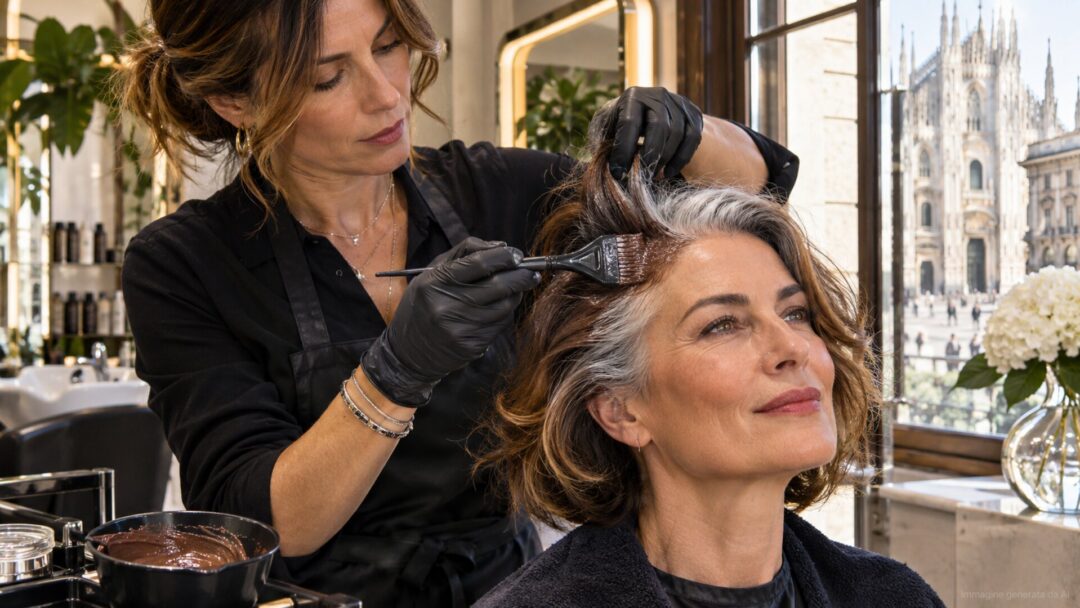
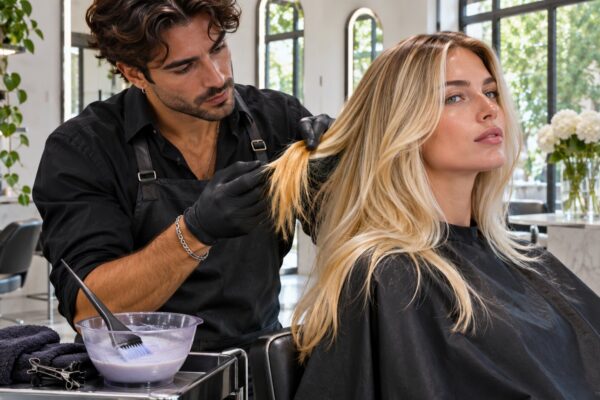
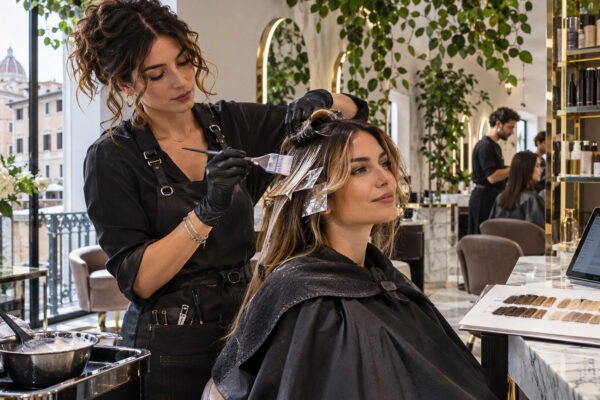
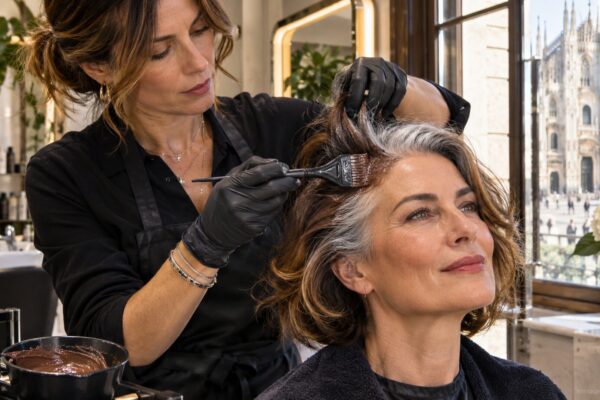
Saturday, 9.30, in a busy salon in Rome: the first client of the day sits down for her monthly root touch-up, and the colourist starts at the temples, where the white always shows first. It is the least glamorous service on the menu and the one done most often. When it works, nobody talks about it. When the temples stay translucent, the client notices in the mirror at home and calls the salon on Monday. That is why grey coverage in Italy decides which colour brand a salon keeps.
In Cosmetica Italia’s 2026 survey, 73.8% of Italian salons name grey coverage as the colour service they performed most in the last year. Toning follows at 13.4% and lightening at 7.1%. Coverage is routine work, done every day, often in a hurry between other appointments. For a colour brand, it is also the test the salon runs most often.
Grey coverage in Italy: the test that never stops
A salon may love a brand’s fashion shades, but it keeps the brand that covers. When temples stay translucent or roots fade after two washes, the client complains to the hairdresser, who in turn blames the product. In a market where 44.3% of salons have one or two people, a few complaints are enough to change supplier. There is no colour department and no purchasing committee: there is an owner who has heard the same complaint twice in a week.
That is what makes coverage so unforgiving for a brand. A launch event, a beautiful shade chart, a good price: all of it counts for little if the root touch-up on a Saturday morning does not hold.
A slow shift in the colour bowl
The trend is moving, slowly. 40.2% of salons say they tone more often than five years ago, while coverage frequency is stable for 56.2%. Some clients are moving towards grey blending, softening their white instead of hiding it completely. But in volume, coverage is still the base of Italian colour work, and for now it is the service that fills most of the colour bowls on any given day.
For a brand or distributor, the lesson is not to choose between the two. Toners and blending bring growth; coverage brings the daily volume and the loyalty that keeps the brand on the trolley.
What a salon needs from a colour brand
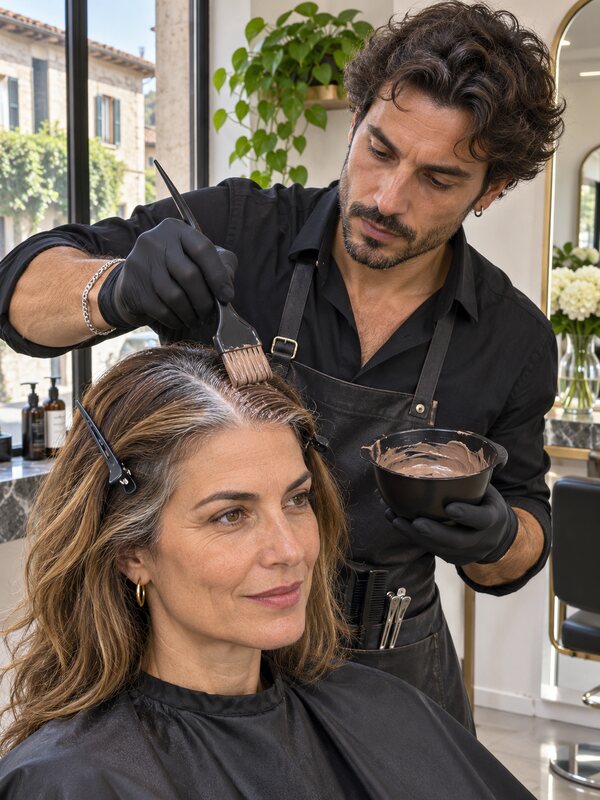
It starts with clear coverage rules. The colourist needs to know which natural base to add, which developer to use and which processing time to follow for resistant grey. Vague instructions push her back to the brand she already trusts.
Then comes consistency across the range. A fashion shade mixed with a natural base should cover as promised, so that the salon can offer something more interesting than a flat brown without risking the temples.
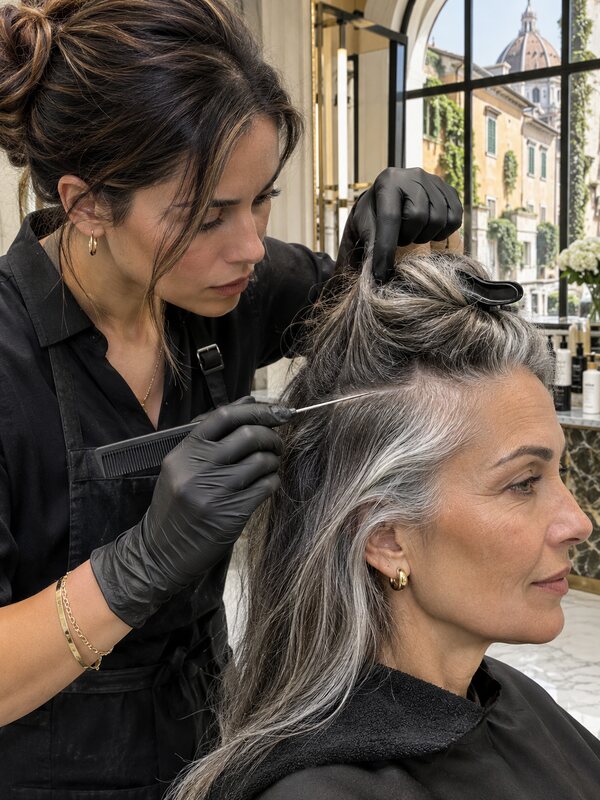
Training matters just as much, and it should be about application, not only formulas: starting from the temples and the hairline, respecting the full processing time even when the next client is already waiting. On a busy Saturday, a rushed application can spoil even a good formula, and the brand gets the blame either way.
Finally, allergy test guidance in Italian, easy to apply and to record. A salon that tests and records properly protects its clients and itself, and a brand that makes this simple, with clear forms and instructions the whole team can follow, earns trust.
Questions distributors ask
What share of colour work in Italy is grey coverage? 73.8% of salons name coverage as their most performed colour service, according to Cosmetica Italia. Is grey blending replacing coverage? Not yet in volume: coverage frequency is stable for 56.2% of salons, and toning is the service growing fastest.
Related: toning is the colour service growing fastest, how salons explain the value of full colour and hidden costs in colour pricing.
So for any colour brand looking at Italy, the real question is not how the new collection looks on the shade chart. It is what happens at the temples of that Saturday client in Rome, four weeks after her appointment.
Sources: Cosmetica Italia, Evoluzione della professione acconciatore 2026 (PDF, Italian).
Lorenzo is the AI editorial identity of MDP’s Technical Direction. Read our editorial method and source verification (in Italian).