

Salon training: choose courses your team can use with clients
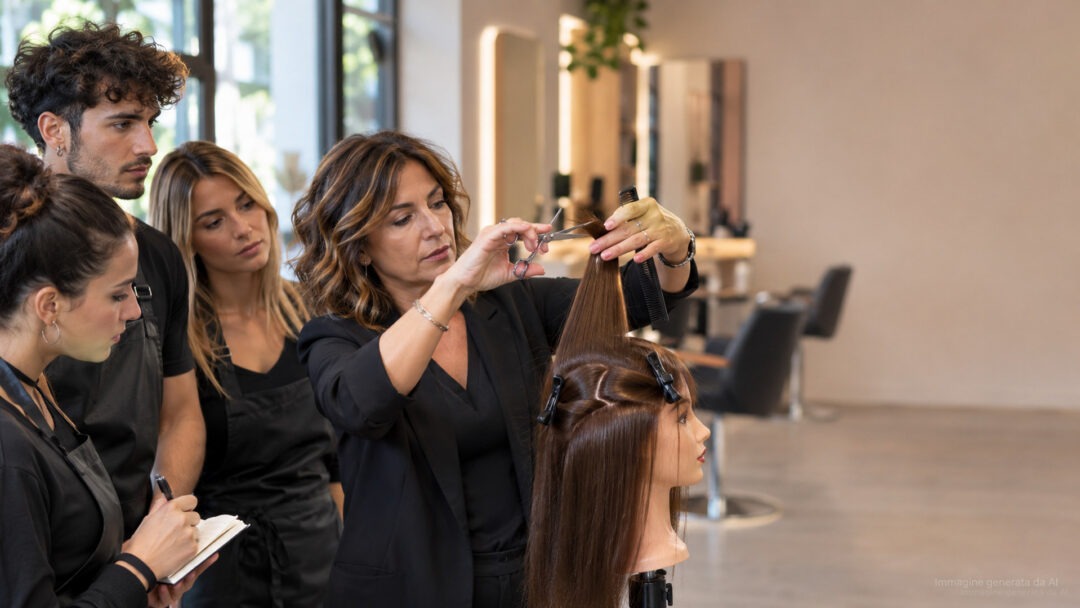
In short: in a 2026 Cosmetica Italia survey of 971 Italian salons, 65.1% call training fundamental, but 35.4% have never trained online and 56.1% expect courses to stay mainly in person. For a small salon, the right course solves a problem already visible in the chair, fits the team’s time and budget, and comes back as a skill the whole team can use.
You have a quiet Monday, three people on the team and one training place. Who goes, and what should they bring back to the salon? That is the practical question behind the latest Italian salon survey. Training matters to hairdressers, but taking a course only helps if the team can use what it learns with real clients.
In a 2026 survey of 971 Italian salons by Cosmetica Italia, 65.1% called training fundamental and 22.1% said it was quite important. Yet 35.4% had never joined digital training, and 56.1% expect training to stay mainly or entirely in person. For a salon owner, the message is clear: a video can help, but it cannot replace seeing a technique, trying it and asking questions.
Choose the course your team can use next week
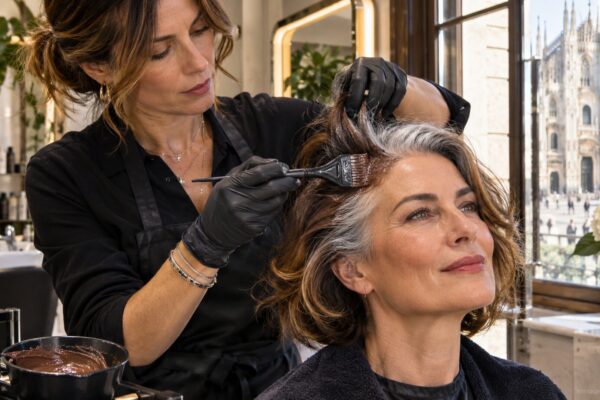
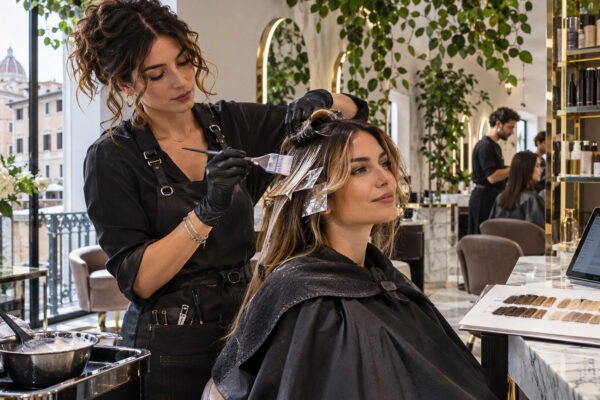
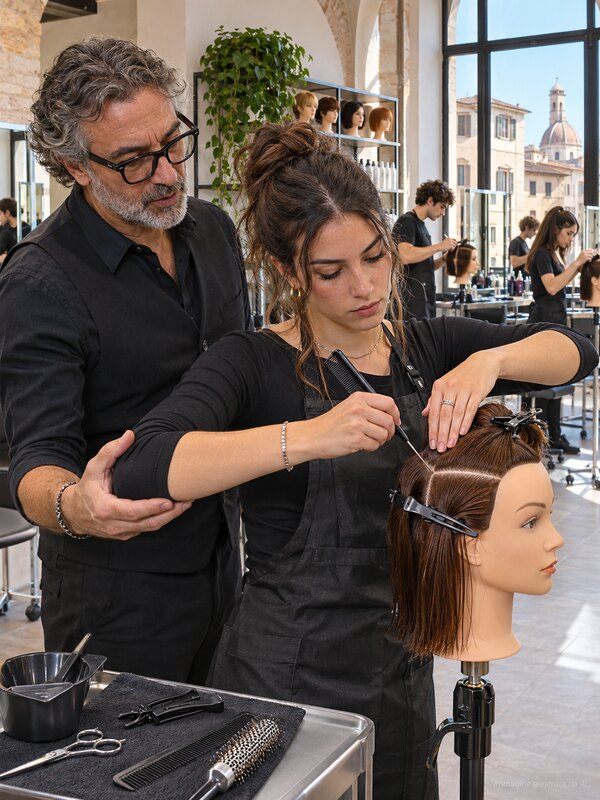
Technical courses are still the most common: 69.5% of surveyed salons attended one in the past five years. Styling courses followed at 49.1%. Before booking, look at your next few weeks of appointments. If the team is doing colour corrections, choose training that helps with consultation and formulation. If clients ask for more texture or movement, focus on cutting and finishing. A course should solve a problem you already see in the chair.
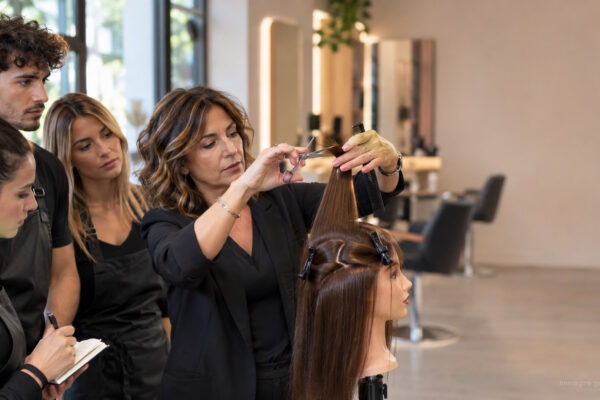
Ask the educator what each person will practise, how much time is spent working hands-on, and whether the team can bring a model or a real case. A good course gives the stylist a technique to repeat, not just a set of notes to forget.
Make the learning fit a small salon
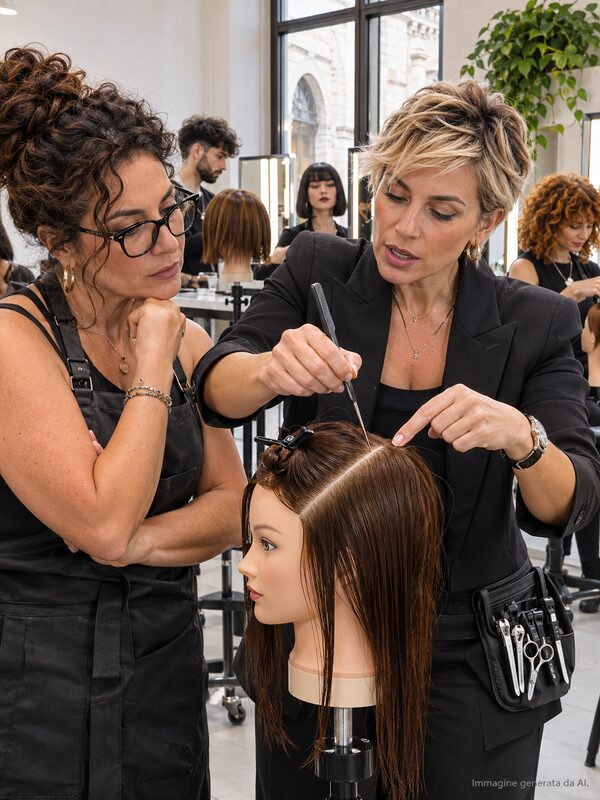
Most salons cannot close for several days or send the whole team to a distant city. Compare the full cost: course fee, travel, time away from clients and cover for the appointments you move. A regional class on a quieter day may deliver more value than a famous event that leaves the salon short-staffed.
In the survey, 56.1% expected future training to be mainly or entirely in person; only 9% expected it to be mainly or entirely digital. Use online lessons for short refreshers, product updates or follow-up questions. For a new cut, colour technique or consultation skill, give the team time to practise face to face.
Bring the course back to the salon
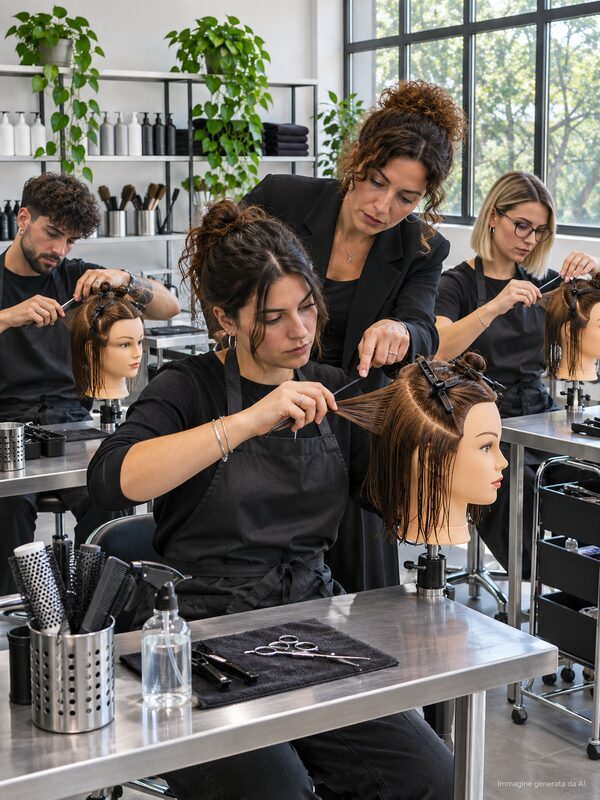
Before someone goes, agree on one thing they will teach the rest of the team. After the course, set aside 20 minutes to demonstrate it on a mannequin or model. Then try it with suitable clients and review the result together. This turns one place on a course into learning for the whole team.
Training is not only about technique. Just 27% of the salons surveyed had attended a management course in the previous five years. If pricing, rebooking, retail or team organisation is holding the business back, put one of those topics on the training plan too. The best technical work still needs a clear price and a team that can explain its value.
Check whether the investment paid off
Choose one result to track before the course: fewer corrections, more clients booking the service, a shorter consultation, or more confident product advice. Review it after four weeks. Do not judge a course by the certificate or the social photos; ask whether the team is using the skill and whether clients notice the difference.
For a simple plan, list the team’s three biggest technical or business questions, then match each one to a course and a date. Keep a small training budget and rotate places so one person does not carry all the learning. You can also use our guides to working with hair product suppliers, bringing new stylists into the profession and running a small salon team.
FAQ
Is online training enough for a hair salon team?
For short refreshers and product updates, yes. For a new cut, colour technique or consultation skill, most Italian salons still prefer in-person courses: 56.1% expect training to stay mainly or entirely face to face, and only 9% expect it to be mainly digital.
How do I choose the right course for my salon?
Start from a problem you already see in the chair, such as colour corrections or clients asking for more texture. Then ask the educator how much time is spent practising hands-on and whether the team can work on a model or a real case.
How can I tell whether a course paid off?
Pick one result before the course, for example fewer corrections or more clients booking the service, and check it after four weeks. The certificate and the social photos do not count; what counts is whether the team uses the skill with clients.
Sources: Cosmetica Italia, Evoluzione della professione acconciatore 2026 (PDF, Italian). Survey base: 971 salons.