Soft bixie after 50: the short haircut that stays soft and easy to wear
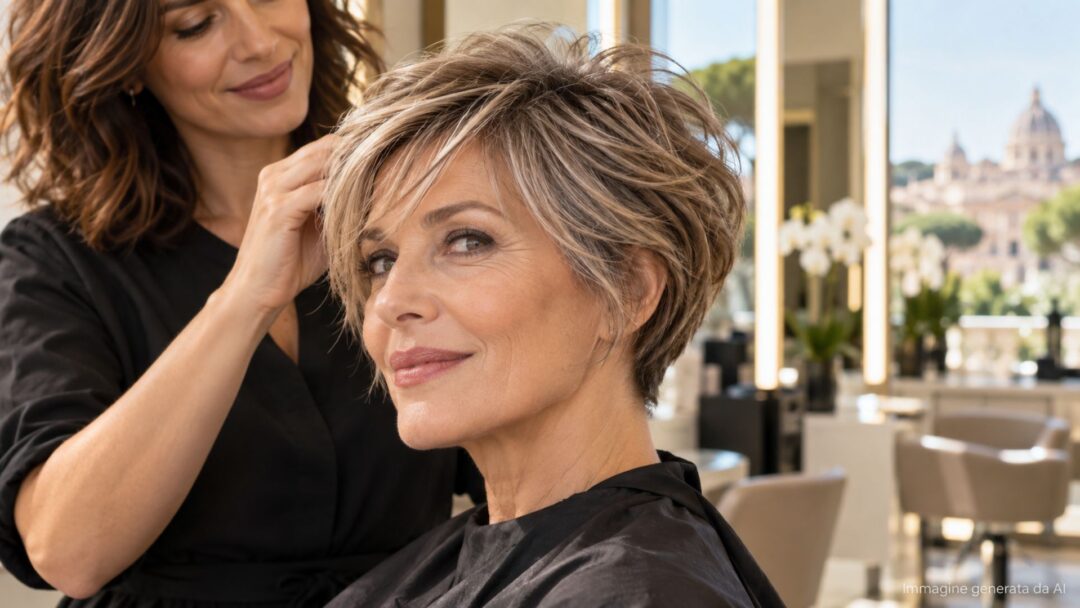
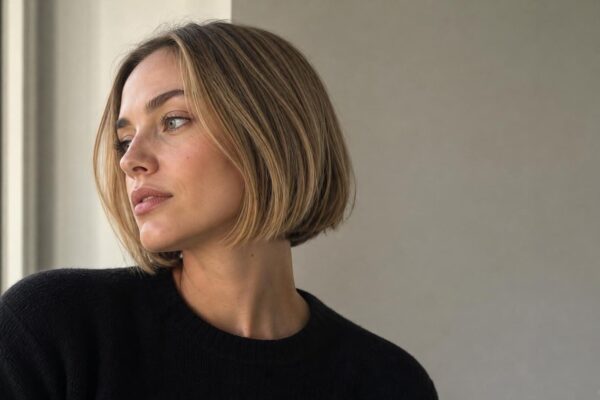
Do you want to go shorter, but worry that a short haircut may make the face look harder or demand too much styling? A soft bixie can be the right middle ground. It combines the practicality of a pixie with the softness of a bob, using flexible edges, a lighter nape and face-framing pieces.
There is no single bixie for everyone. After 50, the goal is not to “look younger” at any cost. The goal is to design a haircut around density, texture, features and the time the client actually wants to spend on her hair.
What is a soft bixie?
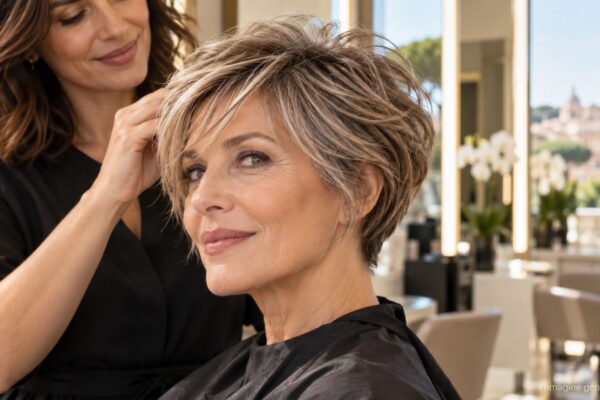
The bixie sits between a bob and a pixie. It keeps more length on top and around the face than a classic short cut, while freeing the nape and outline. The soft version avoids overly graphic lines and uses gentle layers, mobile ends and controlled volume.
It can work well for a client moving from a bob to shorter hair without wanting a drastic break. It is also useful for growing out a pixie while keeping a clear shape.
The MDP Three-Volume Map
To choose the right bixie, MDP uses a simple reading system: top volume, side volume and back volume. The result changes according to which area must lead the shape.
1. Top volume: lift without stiffness
Movement on the crown can lengthen the profile and reduce heaviness at the sides. It can help fine hair that tends to lie flat, but it must be measured carefully. Too much lift creates a rigid shape that is difficult to reproduce at home.
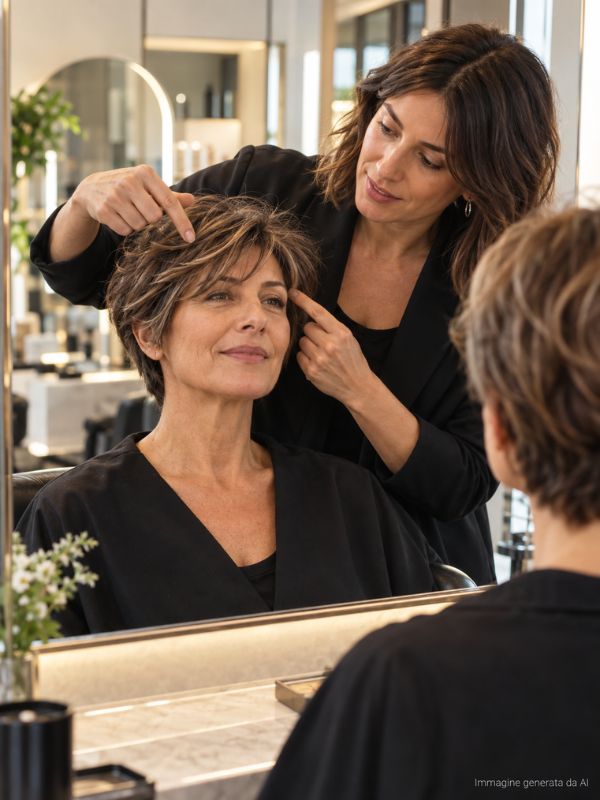
2. Side volume: a softer frame
Longer pieces at the temples and in front of the ears make the move to short hair feel less drastic. They can follow the cheekbones and jaw without trying to hide them. The right length is chosen by looking at the face from the front and at three-quarter view.
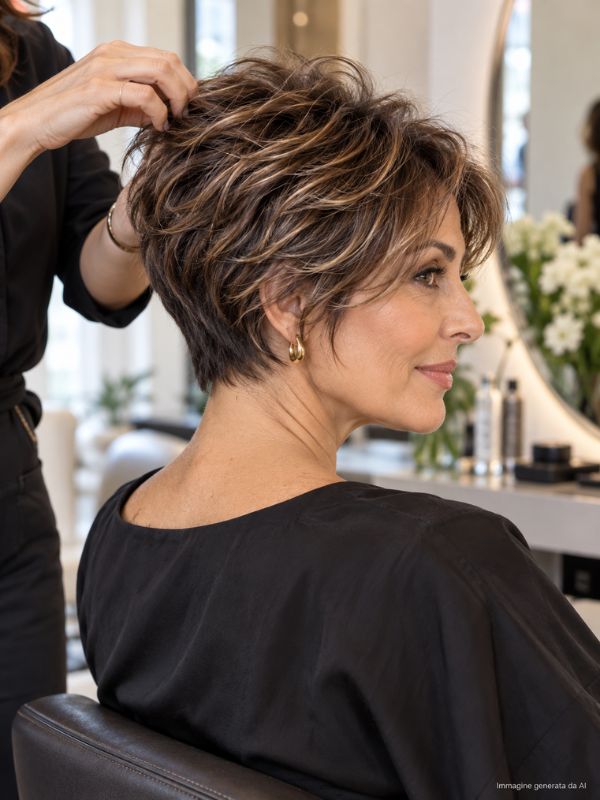
3. Back volume: the nape defines the cut
The back separates a well-built bixie from a short cut with no clear structure. Too much weight can look heavy; too little can expose difficult growth patterns. The stylist must assess the hairline, natural direction and density before removing weight.
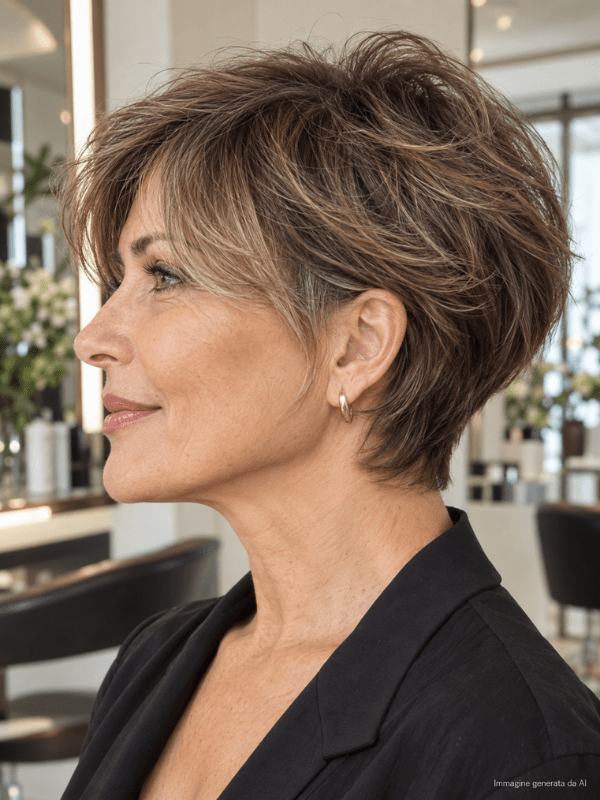
Who does it really suit?
The soft bixie is versatile, but it is not universal. On fine hair it can create a fuller appearance if the layers do not thin the ends. On wavy hair it can gain natural movement. Thick hair needs very precise weight distribution to avoid a helmet effect.
Maintenance also matters. The shape remains clear when the perimeter is refreshed regularly. Before cutting, the stylist should ask how often the client is realistically willing to return.
Making it easy at home
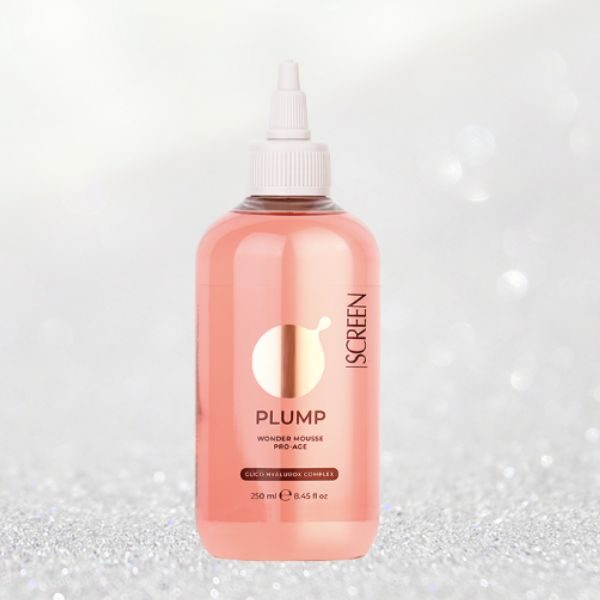
A good bixie should work the next day too. A heat protectant, light mousse when support is needed and a soft paste on the ends are usually enough. Drying should follow natural growth rather than turning every morning into a twenty-minute blow-dry.
The most honest question is simple: how much time does the client really spend styling her hair? Five minutes and fifteen minutes require two different haircuts.
Gugu’s advice
Bring three references to the consultation: front, profile and nape. One online picture cannot describe the whole structure. As explained in our guide to Pinterest photos and hair makeovers, inspiration is only the starting point.
MDP verdict
Approved, with one condition: it must be designed through the three volumes, not copied from a picture. The soft bixie works when it stays soft, readable and repeatable at home.
Which volume would you control first: top, side or back? Tell us in the comments.