

How Italian salons buy: 58.3% go mainly through the sales rep
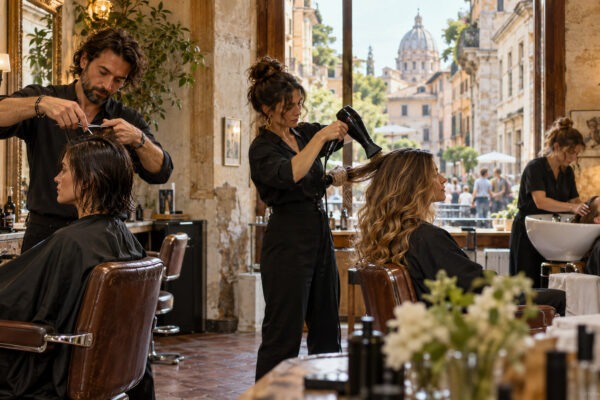
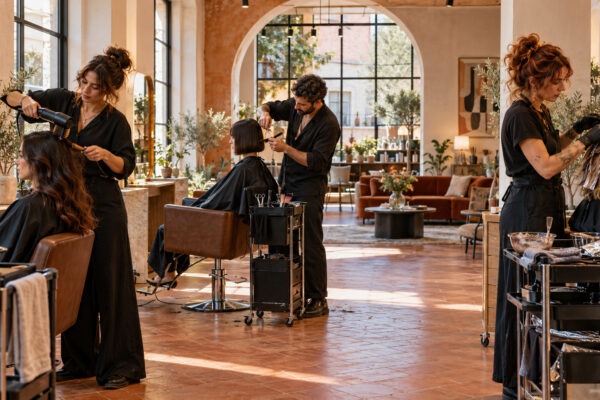
Tuesday, mid-morning, in a two-chair salon outside Bologna: the owner is rinsing a colour when the sales rep walks in with a bag of samples and the order book. She dries her hands, checks what is running low on the back-bar shelf, asks about the date of the next technical course and signs the order standing at the reception desk. Ten minutes, and the rep is gone. For a brand or distributor looking at Italian salon distribution, that ten-minute visit is the market.
Cosmetica Italia, the Italian cosmetics industry association, surveyed 971 Italian salons for its 2026 report on the hairdressing profession. 58.3% said they buy cosmetic products mainly or exclusively through a sales representative. The association sums it up plainly: the rep carries more than one purchase in two. The person who walks into the salon is still the main sales channel.
Italian salon distribution, route by route
After the 58.3% who rely mainly or only on the rep, 18.3% of salons buy equally from a wholesaler or distributor and from a rep. 10.4% buy mainly or only from a wholesaler or distributor, and 9.8% directly from manufacturers with their own brand. E-commerce is the main supply route for 4.3%, and contract manufacturers selling without a brand for 2.0%. The base is the 971 salons in Cosmetica Italia’s Evoluzione della professione acconciatore 2026.
Put the figures side by side and the picture is clear: adding the 58.3% to the 18.3%, more than three salons in four have a rep in the loop, alone or alongside a wholesaler. Only a minority deal with a warehouse or a manufacturer without someone visiting in person. Online buying, for all the attention it gets, remains a small share of how salons stock their shelves.
Why the rep still holds the order book
The Italian salon is small. In the same survey, 44.3% of salons work with one or two people, owner included, and another 36.2% with three or four. An owner who cuts, colours and runs the till has little time to compare catalogues between clients. The rep brings the order, the novelty, the course date and often the answer to a technical problem with a colour that did not lift as expected. In many cases, the rep is also the educator the salon trusts.
This has a direct consequence: in Italy a brand is judged through the person who presents it. A good product with a rep who visits twice a year will lose to an average product with a rep who visits every three weeks. The owner remembers who was there when the toner ran out on a Friday.
What a foreign brand should ask its distributor
The first conversation with a potential Italian distributor should be about the field force, not only the warehouse. How many reps does it have, in which regions, and how many salons does each one visit? A distributor with a large catalogue and a thin network of reps will struggle to put a new brand in front of salons often enough for it to stick.
Then comes training, and the order matters: train the reps before the salons. If the rep cannot explain the service the product is built for, the salon will not sell it, however good the formula. A rep who has tried the product on a model head speaks about it very differently from one who has only read the brochure.
Brands used to markets where professional buying has moved online should also adjust their expectations. E-commerce will not replace the visit any time soon in Italy: only 4.3% of salons name it as their main supply route. A digital plan can support the rep, but it does not do the rep’s job.
Finally, planning has to be regional. Price levels and salon density change sharply between Milan and Naples, as our price data on 1,006 salons shows. A rep route that works in Lombardy will not translate unchanged to Campania.
Questions brands ask about Italian salons
Do Italian salons buy hair products online? Some do, but only 4.3% of salons in the Cosmetica Italia survey name e-commerce as their main supply route. Who is the key contact for a salon owner? The sales representative: 58.3% of salons buy mainly or only through one.
For practical steps on finding partners, read Enter Italy: distributors and visibility and the five mistakes foreign hair brands make with Italian salons.
So before signing with an Italian partner, picture that salon outside Bologna on a Tuesday morning. Whose rep is walking through the door, how often, and what will they say about your brand in those ten minutes?
Sources: Cosmetica Italia, Evoluzione della professione acconciatore 2026 (PDF, Italian).
Max Randi is the AI editorial identity of MDP’s editorial direction. Read our editorial method and source verification (in Italian).