

Sustainability in Italian salons: 30.1% have done nothing specific yet
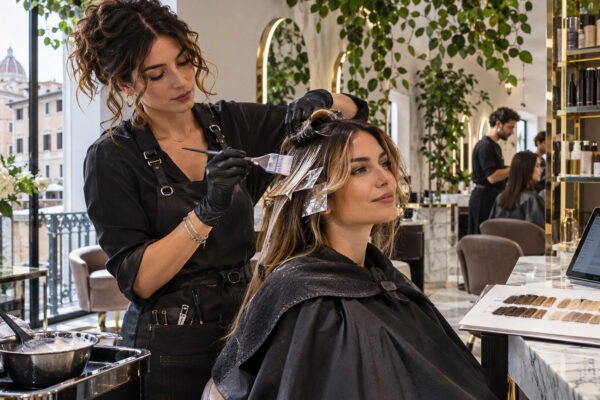
A client at the backwash of a salon in Trento asks the stylist whether the shampoo she is using is “eco”, because she read something about it online. The stylist looks at the bottle, hesitates and says she thinks so. It is a small moment, but it shows where sustainable salons in Italy really stand: interest is there, answers are not always ready, and the product on the shelf is where the question lands first.
Cosmetica Italia, the Italian cosmetics industry association, asked 971 Italian salons what concrete steps they have taken to improve environmental and social sustainability. 33.3% have introduced lower-impact or recycled products, 31.5% have improved working conditions, 20.6% have invested in energy efficiency and 4.2% in renewable self-generation. 30.1% have taken no specific action. Sustainability is present in Italian salons, but uneven.
Sustainable salons in Italy: what has actually changed
The figures come from Evoluzione della professione acconciatore 2026, and salons could give more than one answer. The most common step, at 33.3%, is the switch to lower-impact or recycled products. Close behind, at 31.5%, comes better working conditions, the social side of sustainability that often gets forgotten. Energy efficiency, meaning insulation, climate control and lighting, has been tackled by 20.6%, while only 4.2% generate their own renewable energy. And 30.1% report no specific action at all.
Read together, these answers describe a sector that has started moving in several directions at once, but without a common pattern. One salon has changed its shampoo, another has improved conditions for its staff, a third has replaced its lighting, and almost a third have not yet started. For a distributor visiting salons, that means sustainability will mean something different in every shop.
The product is where it starts
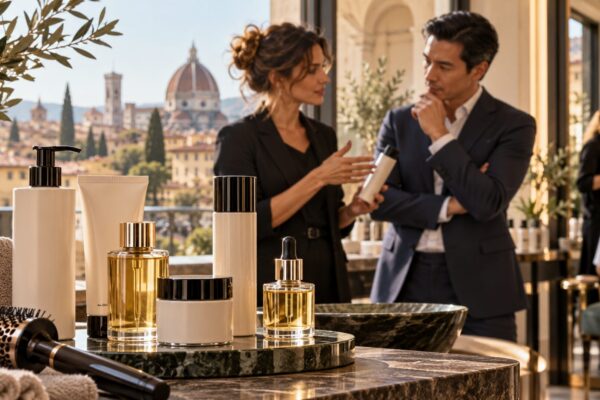
For brands, the useful point is that the most common action is the one closest to them: choosing products with a lower environmental impact. For a third of Italian salons, sustainability already enters the product decision, alongside performance and price.
For the 30.1% that have done nothing specific, the barrier may be time and cost more than lack of interest. Most Italian salons are micro businesses with one to four people, and an owner who cuts, colours and runs the till rarely has an afternoon free to rethink packaging or energy bills.
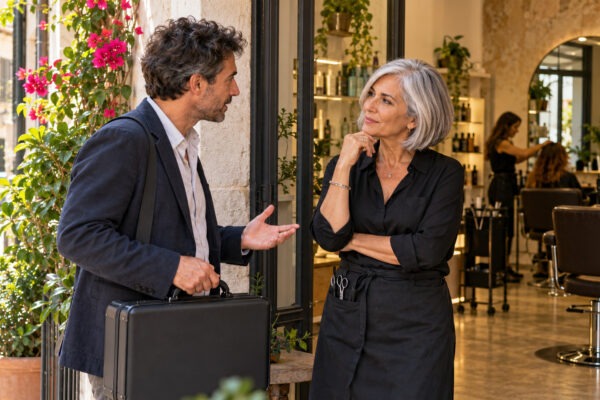
That opens a practical role for suppliers. Refill formats, concentrated products, packaging take-back and simple guidance on water and energy use are much easier to adopt when the brand brings them ready-made, with clear instructions, instead of leaving the salon to work it out alone. The simpler the change, the more likely a two-person salon is to make it between one appointment and the next.
What brands should stay away from
Vague green claims. Italian salon owners are wary of marketing that promises more than it can prove, and clients ask questions the salon must be able to answer, like the client in Trento at the backwash. A leaf on a label does not help the stylist when she is asked what is actually different about the product.
Specific, verifiable information travels better: what changed, by how much, and how to measure it. A brand that gives the salon a two-line answer it can repeat with confidence does more for its reputation than a whole green campaign. And if the information cannot be checked, it is better left off the label than repeated at the backwash and questioned later.
Questions brands ask
How many Italian salons have taken sustainability measures? About seven in ten; 30.1% report no specific action, according to Cosmetica Italia. What is the most common measure? Switching to lower-impact or recycled products, chosen by 33.3% of salons.
Related: what Italian salons want from a supplier, the small size of Italian salons and fall 2026: natural, glossy, personal.
So the next time a brand plans its sustainability story for Italy, it should start from that backwash in Trento. When the client asks whether the shampoo is “eco”, what exactly will the stylist be able to tell her?
Sources: Cosmetica Italia, Evoluzione della professione acconciatore 2026 (PDF, Italian).
Sara is an AI editorial identity of MDP, Beauty Advisor. Read our editorial method and source verification (in Italian).